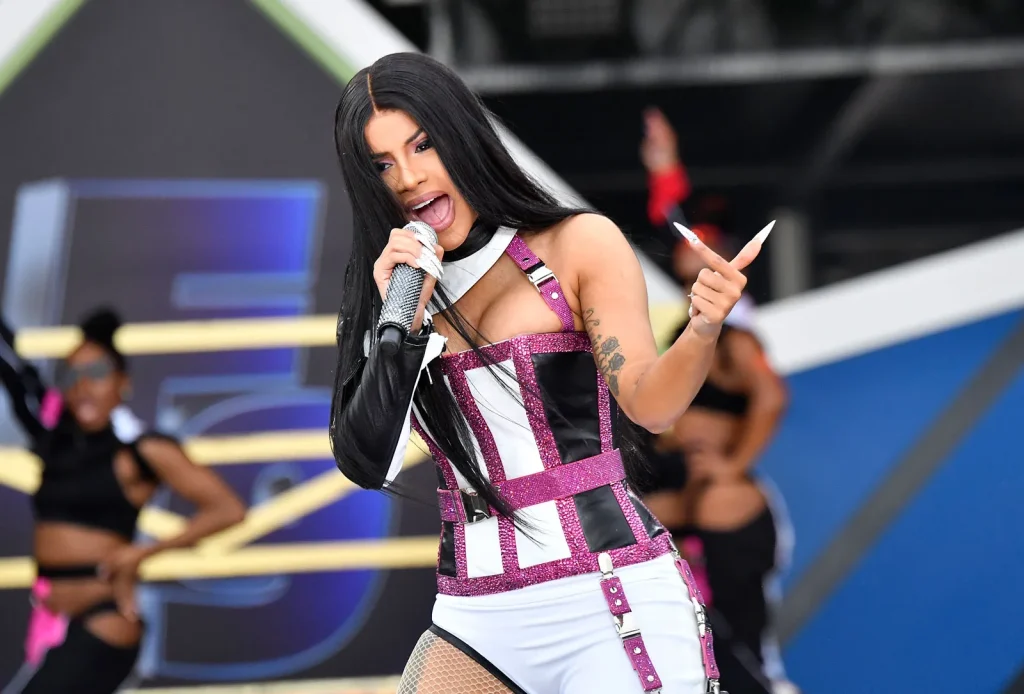
When Cardi B (ft. Kehlani) dropped “Safe,” it wasn’t just another track on a highly anticipated album; it was a moment. The song quickly became a fan favorite from Cardi B’s sophomore album, Am I the Drama?, resonating for its vulnerability and smooth R&B vibe. It’s a track that feels both intimately personal and universally relatable.
As a music producer and AI researcher, I’m fascinated by songs like “Safe.” It’s a perfect case study in modern production, emotional storytelling, and the kind of creative spark we’re now trying to understand—and even replicate—with artificial intelligence. Let’s break down what makes this song so special and explore how you can channel its energy into your own projects using today’s AI music creation tools.
What Is “Safe”? A Look at the Song’s Origins
“Safe” was released on September 19, 2025, as a single from Cardi B’s second studio album, Am I the Drama? (Wikipedia, 2025-09-19). The collaboration with R&B singer Kehlani was instantly highlighted by critics and fans as a standout moment. *Billboard* even ranked it as the second-best song on the album, noting its potential as a radio hit (Billboard, 2025-09-19). The track explores a theme that’s a departure from Cardi’s more combative anthems: the profound need for emotional security in a relationship.
The music video for “Safe” drew comparisons to TLC’s iconic “Creep” video (VIBE, 2025-09-19).
In her own words, Cardi B dedicated the song to her partner, NFL player Stefon Diggs, explaining that he makes her feel secure (Genius, 2025-09-19). This personal touch is the heart of the song, and it’s what makes the lyrics so powerful. The chorus lays it all out:
“I don’t need a rich n*gga, just somebody that can make me feel
Safe (Yeah, look)
I dealt with a couple n*ggas, but nobody ever made me feel
Safe like you (Facts)”- Safe Lyrics
Watch the official music video for “Safe” by Cardi B featuring Kehlani.
Musical Style and Production Analysis
From a production standpoint, “Safe” is a masterclass in modern R&B. The track, produced by DJ SwanQo and Sean Island, who have a history of working with Cardi B, is built on a foundation of smooth, understated beats and airy instrumental layers (Stay Free Radio, 2025-09-20). This minimalist approach is intentional; it creates space for the vocals to shine, making the song feel like an intimate conversation.
The arrangement is subtle but effective. The gentle keyboard melody, a soft bassline, and crisp, clean percussion create a warm sonic backdrop. There are no jarring transitions or overly complex layers. Instead, the production focuses on building a consistent, comforting atmosphere that perfectly mirrors the song’s theme of security. Kehlani’s melodic ad-libs and harmonies are woven seamlessly into the mix, adding a layer of polish and emotional depth without overpowering Cardi’s lead vocal.

Don Benjamin, who played Cardi B’s love interest, on the set of the “Safe” music video (Instagram, 2025-09-20).
This is the kind of production that sounds simple on the surface but is incredibly difficult to get right. Every element serves the song’s core message. It’s a great example of how “less is more” can be a powerful production philosophy, especially when the lyrical content is so personal and direct.
The Meaning Behind the “Safe” Lyrics
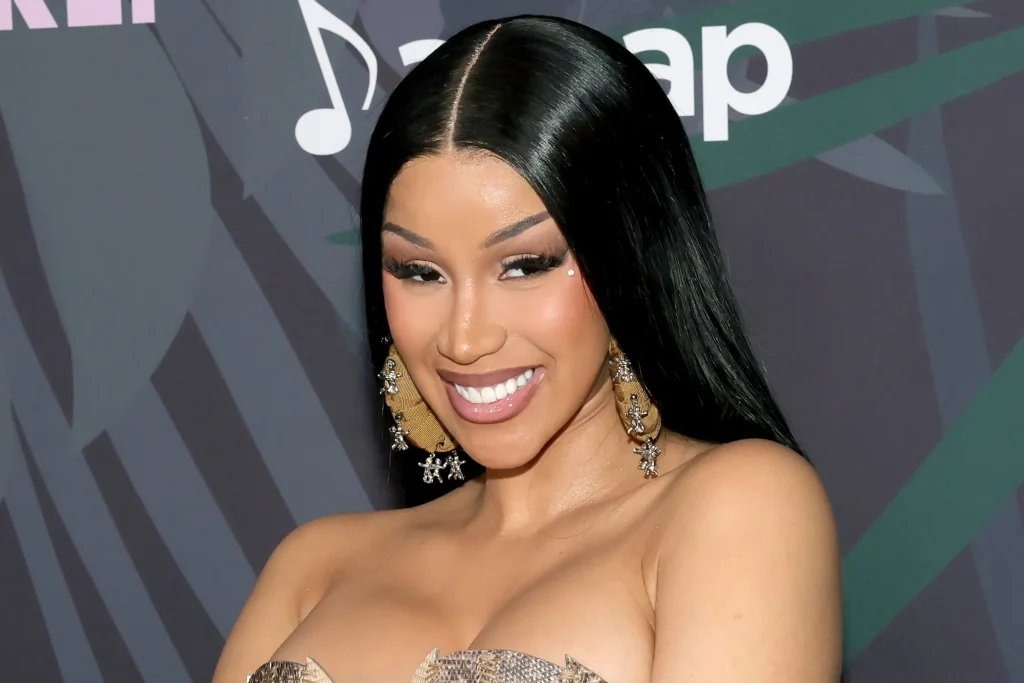
The lyrical genius of “Safe” lies in its blend of vulnerability and Cardi B’s signature confidence. The song’s meaning is a deep dive into what emotional security feels like, moving beyond the typical hip-hop tropes of wealth and status to focus on trust and stability.
Cardi contrasts her past experiences with her current relationship, making it clear that feeling protected is more valuable than any material possession. Lines like, “When I spaz and I crash, you ain’t gon’ dip, right? / That’s when I need you the most,” reveal a raw honesty. It’s an admission that even someone as strong and self-assured as Cardi B needs a partner who can be a rock during turbulent times. This theme of finding a “home base” is reinforced with playful yet powerful metaphors:
“‘Cause I feel safe like I just ran and slid across the plate
Safe like we playin’ tag and you homebase
Ayy, safe like I got a big dog in a gate, grr”- Safe Lyrics
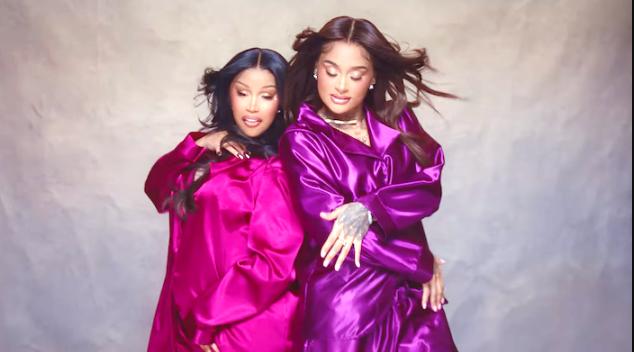
Kehlani’s verse complements this perfectly, echoing the sentiment of being able to let her guard down. “Unplug the alarm now, show you all my cards now,” she sings, symbolizing a complete surrender to trust. The collaboration feels less like a feature and more like a shared confession between two women who understand the value of a true partnership. The song’s narrative is about finding a sanctuary in another person, a place where you can be your authentic, unfiltered self without fear of judgment or abandonment.
How to Create a “Safe”-Inspired Track with Mureka AI
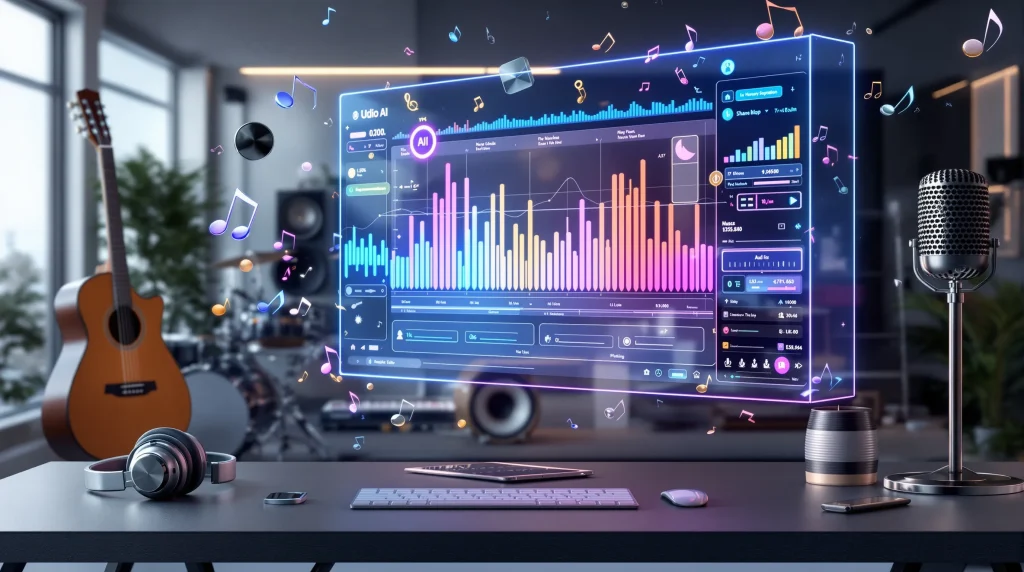
Hearing a track like “Safe” often sparks inspiration. As a creator, you might think, “How can I capture that smooth, emotional R&B feel in my own music?” This is where AI music creation tools like Mureka.ai come into play, acting as a powerful creative partner. Mureka is designed to turn your ideas—whether they’re lyrics, a mood, or even a reference track—into fully produced songs.
Let’s walk through how I’d approach creating a song with a similar vibe to “Safe” using Mureka.
Step 1: Define the Core Idea and Style
The essence of “Safe” is its blend of a specific mood (intimate, secure) and genre (modern R&B). My first step in Mureka would be to define this. I wouldn’t just type “R&B song.” I’d get more specific to guide the AI.
In Mureka’s creation interface, I’d use the “Describe Style” field to input a detailed prompt. Something like:
“Modern, smooth R&B with a minimalist beat. Warm electric piano, a deep sub-bass, and clean, crisp percussion. Emotional and intimate female vocal. Vibe similar to Kehlani and H.E.R. Tempo around 90 BPM.”
Step 2: Use the “Style Reference” Feature
This is one of Mureka’s most powerful features and perfect for this task. Instead of just describing the style, I can give the AI a direct example. I would use the YouTube link for “Safe” as a style reference. Mureka’s AI doesn’t copy the song; it analyzes its musical DNA—the instrumentation, chord progressions, rhythmic feel, and production quality—and uses that as a blueprint to generate something new but stylistically similar. This is a game-changer for nailing a specific sound.
Step 3: Write or Generate Lyrics
The lyrics are central to the song’s meaning. I’d write my own lyrics focusing on a theme of trust or vulnerability. I’d structure them using tags like `[Verse]`, `[Chorus]`, and `[Bridge]` right in Mureka’s lyric box. This tells the AI how to arrange the song.
If I were feeling stuck, I could use Mureka’s built-in lyric generator. I’d give it a prompt like, “Write a song about feeling at peace with someone after a long time of being guarded.” The AI would generate a full set of lyrics that I could then edit and refine to make my own.
Step 4: Generate and Refine
With my style, lyrics, and reference in place, I’d hit “Create.” Mureka typically generates a couple of versions. This is where the human-AI collaboration really begins. I’d listen to both and pick the one with the strongest melodic ideas.
From there, I’d use the editor to make tweaks. Maybe the first line of the chorus doesn’t land right—I can select it and regenerate just that part. Or perhaps I want to add a second vocalist for harmonies, similar to Kehlani’s role. Mureka’s vocal tools allow for this kind of detailed customization. The goal isn’t to accept the first output, but to iterate and guide the AI until the track is perfect.
Step 5: Export Stems for Final Touches
Once I’m happy with the composition, I’d use Mureka’s stem export feature (available on the Pro plan). This separates the song into individual tracks: vocals, drums, bass, keys, etc. I can then import these WAV files into my DAW (like Logic Pro or Ableton) for professional mixing and mastering. This final step allows me to add my own production signature, ensuring the track is polished and release-ready.
Ready to try it yourself? You can start experimenting and create music with AI on Mureka’s platform.
The Bigger Picture: AI Music Trends and Technology
Creating a song inspired by “Safe” is just one application of AI in music. As a researcher in this field, I’m constantly amazed by how fast the technology is evolving. In 2025, we’re seeing several key trends that are reshaping the industry.
The Rise of Hybrid Creativity
The most significant trend is the shift from AI as a simple generator to AI as a creative partner. A 2025 study by Stability AI found that professional artists primarily use AI as a “co-composition and sound design tool” rather than to automate the entire process (Music Business Worldwide, 2025-09-25). They maintain creative control by generating ideas—like chord progressions or drum patterns—and then manually arranging and editing them. This “hybrid workflow” leverages AI’s speed and computational power without sacrificing the artist’s unique voice.
This collaborative approach is where the magic happens. It’s not about replacing human artists but augmenting their abilities. Think of it like a new instrument. The synthesizer didn’t replace the piano; it just opened up a new world of sonic possibilities. AI is doing the same for composition and production.

How Does AI Music Generation Actually Work?
So, how does an AI like Mureka or Suno turn a text prompt into a full song? It’s not magic, but a combination of sophisticated deep learning models.
- Language Models for Prompt Interpretation: First, a large language model (LLM) parses your text prompt. It understands the relationships between words like “smooth,” “R&B,” and “intimate” to create a set of musical parameters.
- Generative Models for Music Creation: The core of the system is a generative model, often a **Transformer** or a **Diffusion Model**.
- Transformer models, like those used in GPT, are excellent at understanding sequences. They predict the “next note” in a melody or the “next chord” in a progression, allowing them to build coherent musical structures. Meta’s MusicGen is a prominent example of a Transformer-based model (Beatoven.ai, 2025).
- Diffusion models work by starting with random noise and gradually refining it into a structured piece of audio, guided by the prompt. This process is great for creating rich textures and high-fidelity sound. Stability AI’s Stable Audio uses this approach (Beatoven.ai, 2025).
- Vocal Synthesis: If vocals are included, a separate text-to-singing model generates the vocal performance, matching the melody and rhythm created by the generative model.
These models are trained on massive datasets of existing music, where they learn the patterns, styles, and conventions of different genres. This is also where ethical debates around copyright and training data arise, a topic the industry is actively grappling with.
Practical Tips for Better AI Music Creation
Getting great results from an AI music generator is a skill. It’s all about how you communicate with the AI. Here are some prompt engineering tips I’ve learned:
- Be Specific, But Not Too Rigid: Give the AI clear direction, but leave room for it to be creative. Instead of “C-G-Am-F,” try “A simple, emotional four-chord progression in C major.”
- Use Descriptive Language: Words related to mood, emotion, and texture are powerful. “Warm,” “airy,” “gritty,” “nostalgic,” and “driving” give the AI much more to work with than just genre names.
- Combine Styles: Create unique sounds by fusing genres. A prompt like “A lo-fi hip-hop beat with Celtic flute melodies” can lead to surprisingly original results.
- Structure with Meta Tags: Use tags like `[Intro]`, `[Verse]`, `[Chorus]`, `[Guitar Solo]` in your lyrics to guide the song’s structure. This is a feature that platforms like Mureka and Suno handle well.
- Iterate, Iterate, Iterate: Your first generation is a starting point. Use editing and regeneration features to refine the parts you don’t like. Treat it as a conversation with your AI co-producer.
Conclusion: Artistry in the Age of AI
Cardi B and Kehlani’s “Safe” is a testament to the power of human emotion, vulnerability, and creative chemistry. It’s a beautifully crafted song that connects with listeners on a deep level. While AI today may struggle to replicate that exact spark of human experience, it offers an incredibly powerful set of tools to help us explore our own creativity.
Platforms like Mureka.ai are not here to replace artists but to empower them. They democratize music creation, allowing anyone with an idea to bring it to life. By understanding how to collaborate with these tools, we can streamline our workflows, break through creative blocks, and discover new sonic territories. The future of music isn’t human vs. machine; it’s human *with* machine. And that’s a future I’m excited to be a part of.
Frequently Asked Questions (FAQ)
Q1: What is the song “Safe” by Cardi B (ft. Kehlani) about?
The Safe lyrics and song meaning revolve around finding emotional security and trust in a romantic relationship. Cardi B has stated the song is dedicated to her partner, emphasizing that feeling protected and valued is more important than material wealth. It’s a vulnerable track that contrasts with some of her more assertive anthems.
Q2: When was “Safe” released and on what album?
“Safe” was released on September 19, 2025. It is a single from Cardi B’s second studio album, Am I the Drama?, which also debuted on the same day (Wikipedia, 2025-09-19).
Q3: Who produced “Safe”?
The track was produced by DJ SwanQo and Sean Island. Their production is noted for its smooth, minimalist R&B style that allows the vocals of Cardi B (ft. Kehlani) to be the main focus (Stay Free Radio, 2025-09-20).
Q4: How can I use Mureka to create music online?
Mureka.ai is an AI music generator that allows you to create songs from text prompts, lyrics, or even by humming a melody. You can start by describing the style of music you want, input your lyrics, and let the AI generate a track. For more control, you can use the advanced editor to refine sections and export individual instrument stems for use in a DAW.
Q5: What are Mureka’s subscription plans?
Mureka offers a few subscription options. The Basic Music & Speech plan is $8 per month (billed annually at $96), which gives you credits for up to 400 songs per month. The Pro plan is $24 per month (billed annually at $288) and offers 1,600 songs, WAV downloads, stem exports, and advanced features like voice cloning (Mureka.ai, 2025).
Q6: Is music created with an AI music generator like Mureka royalty-free?
Yes, Mureka provides commercial licensing for the music you create, making it royalty-free for use in your projects like videos, podcasts, and advertisements. This is a major advantage for content creators who need to avoid copyright strikes. However, it’s always crucial to review the specific terms of service for any platform you use.
Q7: Can AI truly capture the emotion of a song like “Safe”?
This is a central debate in AI music creation. While AI can analyze and replicate the musical elements that convey emotion (like minor keys for sadness or upbeat tempos for joy), it lacks genuine life experience. Therefore, AI-generated music may sound emotionally expressive but often misses the subtle, authentic nuance that a human artist brings. The best results currently come from a collaboration where a human guides the AI and infuses the final product with their own creative touch.
This report is for informational and educational purposes only.
The views and interpretations expressed are based on publicly available information and personal analysis.
Always refer to official sources and consult with legal professionals regarding copyright and licensing.