

A song starts. Four voices enter one after another, each with its own character. That was the starting point for “Raid Team of the Dragon Queen,” a track NEO SEO made to test whether a virtual group could feel as distinct as a team of game characters.
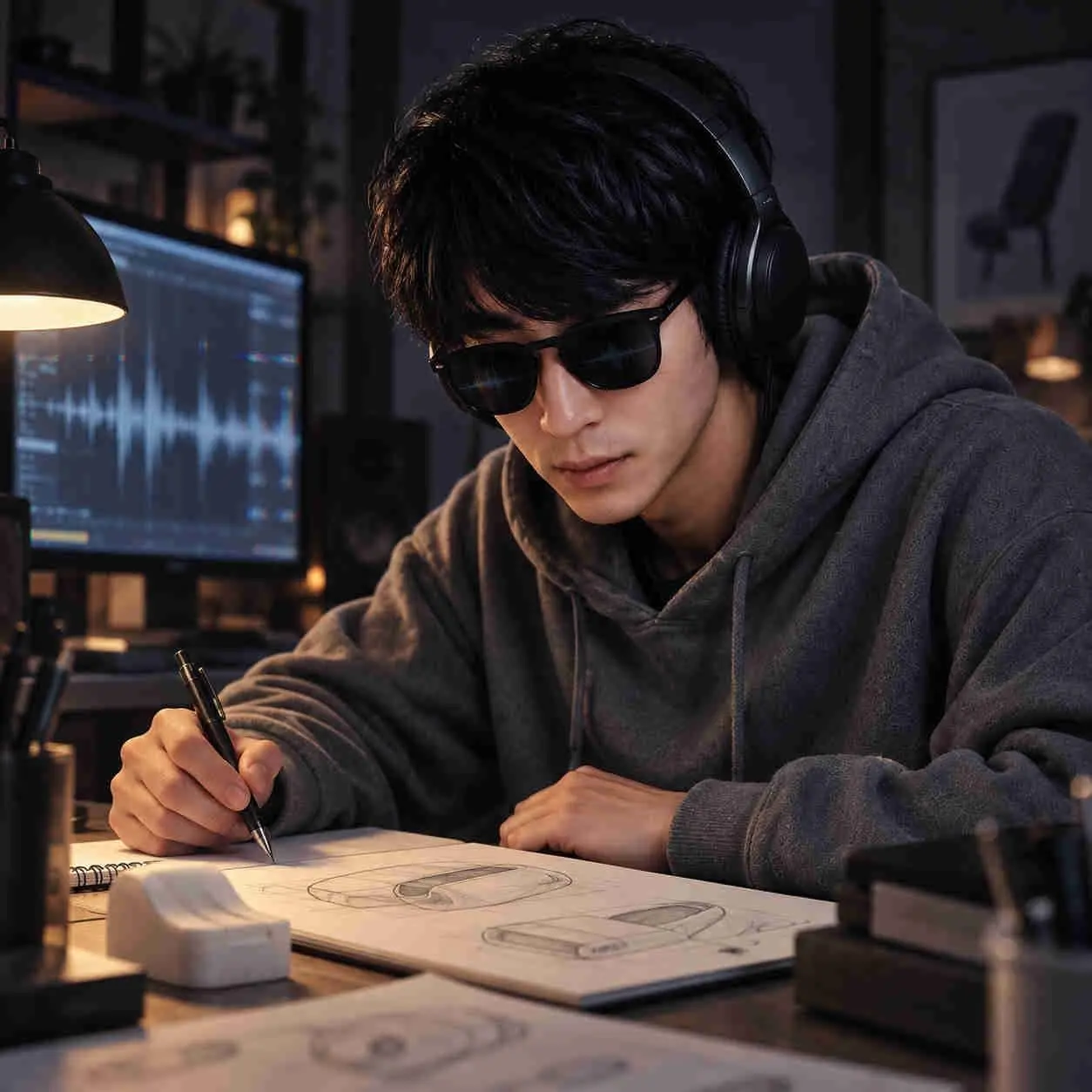
NEO SEO is a 47-year-old freelance product designer based in South Korea who has spent years designing physical small appliances. Music was never his profession. After discovering AI, he found a new way to turn ideas and stories into sound—and GSPK, the virtual group at the center of his work, was created in Mureka and has continued to develop there.
A designer finds a new creative field
With fewer product-design projects recently, NEO SEO had more time to explore. His daughter loves singing and dancing and hopes to become an idol singer, so they often listen to idol music and talk about it together. He has also listened to hip-hop for years, enjoys YouTube videos about science, design, and new technology, and likes making pour-over coffee.
He first tried making idol music in Mureka. Hip-hop was the natural place to begin, so he started asking questions: What would a hip-hop-based idol group sound like? What about an R&B group?
“I’m not a professional musician, but through Mureka I discovered the fun of expressing the thoughts and stories in my head through music,” he says.
Trying the same idea in different genres helped him discover his own taste. More importantly, it changed what he wanted to make. He became less interested in finishing one isolated track and more interested in developing artists with their own voices, personalities, and stories.
GSPK was born in Mureka
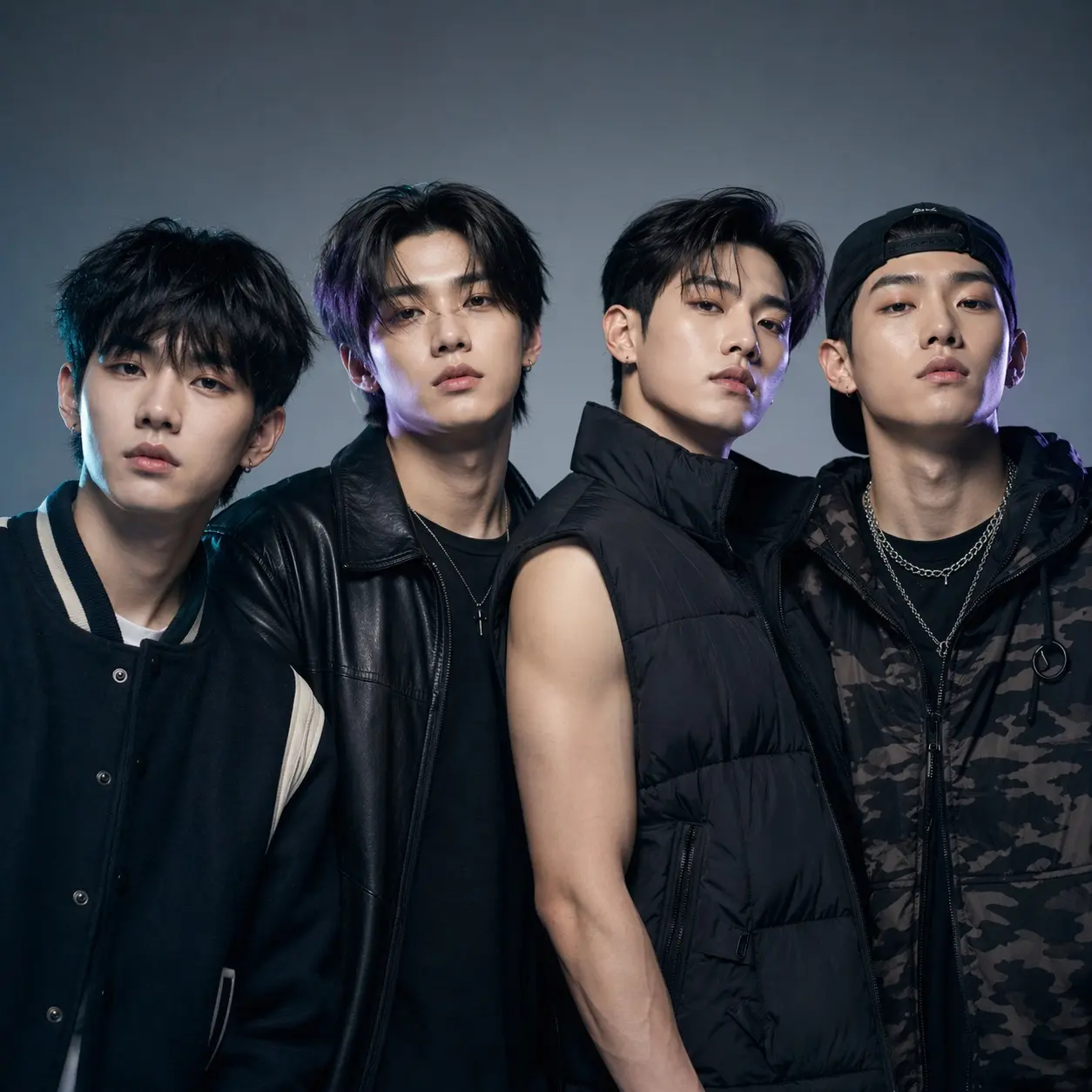
As GSPK took shape in Mureka, NEO SEO began exploring how to make its members feel consistent from song to song. Could different voices remain recognizable? Could a visual identity make each member feel like the same person listeners heard in the music?
One of his earlier experiments was “Typing…,” a song for which he planned a virtual featured artist. After that, he began trying more relay rap, with different voices taking turns within a track.
The hip-hop-based group has four members:
- YUN. His personality comes through mainly in his clothing and fashion style.
- SEO is NEO SEO’s persona, carrying traces of his name and the styles he used to wear.
- CHAN has a more aggressive vocal character.
- GANG represents a more traditionally masculine presence.
Visually, the four are attractive men with a Korean-inspired look. NEO SEO chose not to idealize their appearance too much, aiming for a more approachable feel.
The characters draw on details from NEO SEO and his friends, but they are reshaped and idealized rather than copied. Each name includes a Hangul character taken from the name of the person who inspired that character—clues that friends might recognize, while other listeners may not.
These are GPT-generated character images, not photographs of real people. He brought together visual and vocal traits to create them, preserving individual features rather than pursuing an overly perfect appearance. “The closer a face gets to perfection, the more artificial it can feel,” he says. “Even if there are differences, I wanted to preserve each person’s individual traits.”
For NEO SEO, the real challenge is keeping each member’s voice and visual identity recognizable across songs. Recently, he has been spending more time on characters and videos, seeing visuals as just as important as the music.
Designing music like a product
Product design gives NEO SEO a practical way to approach music. When he designs a product, he turns one concept into form, color, material, and imagery. When he makes a song, he extends its atmosphere and story into cover art, characters, clothing, and video scenes.
“Music and visuals feel less like separate tasks than different ways of expressing the same concept,” he says.
His process is similar in both fields: start with an idea, find the connections, test possibilities, study the result, then revise and refine it until the identity becomes clear. The first idea rarely becomes the final product unchanged—and he treats a song the same way.
GPT helps him explore quickly, but the main idea and final choice remain human decisions. “I tend to be stubborn about the design elements, while AI seems to be stubborn about the musical elements,” he says. One prompt and one set of lyrics rarely finish a song. He keeps generating, comparing, and choosing.
He says it is still too early to know whether working with Mureka has significantly changed how he approaches product design. What he has noticed so far is that he is more comfortable testing several possibilities quickly and finding new directions in results he did not expect.
When an unexpected result becomes a new character
Unexpected female vocals have sometimes appeared while he was making songs for male groups. When those voices were too compelling to discard, he reconsidered the character lineup rather than throwing the songs away. Many of his female characters came about this way.
He has also kept songs that generated with a longer runtime than expected when they still felt engaging. For him, an unexpected result is not automatically an error. It can be a new design decision.
Three Featured Tracks and a Video Example
This song began with a simple question: could each member’s vocal personality stand out like a game character? Its relay structure lets the four voices appear one after another, making it a natural introduction to GSPK.
NEO SEO recommends this song because, in his words, its theme and the way it is presented are connected.
This solo track grew from his gratitude for the time he has spent creating on Mureka. It also points to his next step: exploring what a character can express alone, outside the group. Since the Mureka 9.5 update, he has been experimenting with more combinations of genres and styles.
He also shared “BREAK TIME” as an example of how he presents his music in video.
Explore “BREAK TIME” on Mureka : https://www.mureka.ai/song-detail/5E6m6bQtzWbaXCfeZVoTkz?is_from_share=1
A song continues after it is uploaded
NEO SEO schedules YouTube uploads and tries to release something every day, using the channel as a place to observe how people respond. To him, this offers an indirect experience of the music industry’s cycle of releasing work and hearing listeners’ reactions.
His recent songs often mix his own emotions with fiction. The lyrics of most of his entries for the V9.5 Rap Master Challenge also draw on real experiences or personal stories. He arranged the submissions so that their content connects in the order he submitted them. To follow that thread, he suggests starting at the bottom of the playlist and listening upward through the list.
On Mureka, he now listens to other creators, comments on their work, and discovers forms of expression he had not tried. The same AI music tool can produce completely different results in different hands, and other people’s reactions often reveal something he did not notice himself.
When listeners understand what he meant, he wants to develop that direction further. When they respond to something he did not expect, their reaction can become the next idea. Some creators now wait for one another’s new songs and share their impressions. That exchange has become part of the reason he keeps making music, and Mureka has begun to feel like a small creative community.
Asked whether he had ever imagined himself as a member of an idol group, NEO SEO said he had not. For the challenge, though, he submitted his work as if he were stepping into the spotlight himself—a way of expressing an idea made possible by his experience creating characters and videos.
From laboratory to studio
NEO SEO wants to make a full music video and develop more solo tracks. Looking ahead, he would also like the ability to assign a distinct voice to each of several characters and maintain the group’s vocal identity more easily across songs, including relay rap. He does not want to stay inside one genre or one fixed group; he wants to keep following ideas wherever they lead.
“Right now, Mureka feels closest to a combination of a laboratory and a playground,” he says. It is a laboratory because he can test voices, genres, characters, and groups. It is a playground because he does not need to know the correct answer before he begins. A new character can appear while he is making a song, and an accidental sound can become the starting point for the next one.
With more practice, he jokes, he may eventually use Mureka like a studio. For now, he is still doing what he has always done as a designer: giving an idea a clear identity, then refining it until it can stand on its own.
Explore NEO SEO’s work
Mureka Creator Spotlight is looking for musicians, producers, and cross-disciplinary creators with a sustained creative practice, a distinctive voice, and an approach all their own. Whether you’re releasing your own music, building a long-term music project, or exploring new ways to bring AI and music together, we’d love to hear about your ideas, process, and the stories behind your work. Send your submission to mureka.aimusic@gmail.com, or contact @lenko_z from Mureka’s official operations team on Discord. Your creative journey could be the focus of the next Spotlight.